
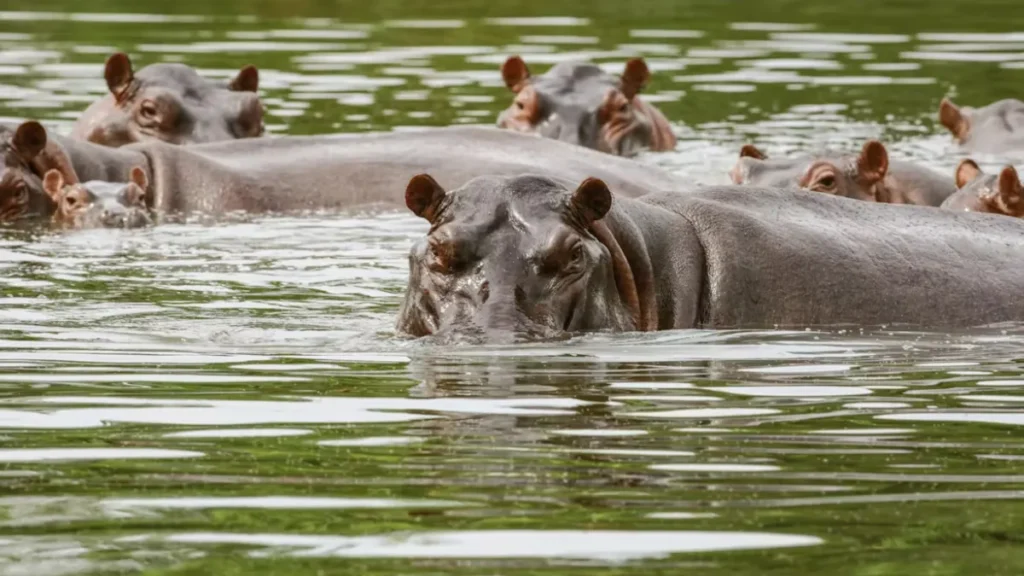
Vantara Team to Assess Feasibility of Transporting Escobar-Era Hippos From Colombia to India
Colombia as Hippo Relocation: A rare and highly complex wildlife relocation proposal is gaining international attention after Colombian authorities confirmed that an Indian organization will soon visit the country to study the possibility of transferring dozens of wild hippos from Colombia to India.
The initiative, which has sparked global debate among conservationists, environmental authorities, and animal welfare groups, centers around a proposal to relocate around 80 hippos currently living in Colombia’s Magdalena Medio region to the Vantara wildlife rescue and rehabilitation center in Gujarat, India.
The operation, if approved, would become one of the largest and most unusual international wildlife relocation efforts attempted in recent years.
The planned visit by Indian experts marks the first major technical step toward evaluating whether the controversial and logistically difficult plan can realistically move forward.
Avanzando en la implementación del Plan Integral para el Manejo de los Hipopótamos, especie exótica invasora en Colombia, hoy sostuvimos una reunión con Vantara, organización de India que realizará una visita técnica al país para evaluar alternativas de translocación. En… pic.twitter.com/b140W3c6tN
— Irene Vélez-Torres (@IreneVelezT) May 6, 2026
Why Colombia’s Hippo Population Has Become a National Problem
The hippos now roaming freely across parts of Colombia are descendants of animals illegally brought into the country during the 1980s by notorious drug trafficker Pablo Escobar.
Escobar imported several exotic animals for a private zoo at his Hacienda Nápoles estate in Antioquia department, including four African hippos. After his death in 1993, many animals from the estate were transferred to zoos or conservation facilities. The hippos, however, remained behind because transporting them was considered too difficult and expensive.
Over the following decades, the animals adapted exceptionally well to Colombia’s tropical environment.
With abundant water sources, warm temperatures, and no natural predators, the hippo population began growing rapidly around rivers, wetlands, and lakes connected to the Magdalena River basin. What started with only four animals has now expanded into a population estimated to be in the hundreds.
Environmental experts warn that the number could continue rising sharply if authorities fail to implement long-term population control measures.
The situation has become increasingly serious for Colombia because hippos are classified as an invasive species. Scientists and environmental agencies say the animals are altering fragile ecosystems, affecting water quality, damaging vegetation, and threatening native wildlife.
Local communities living near affected areas have also raised concerns about public safety. Hippos are known to be highly territorial and unpredictable animals. Farmers, fishermen, and residents in rural communities have reported growing fears about encounters with the massive mammals near rivers and agricultural lands.
As a result, Colombian authorities have spent years searching for a practical solution to contain the expanding population.
Indian Organization to Visit Colombia for Technical Assessment
Colombia’s Environment Ministry confirmed that a delegation connected to the Vantara wildlife conservation center will travel to Colombia to conduct a detailed evaluation of the proposed relocation effort.
The visiting team is expected to include veterinarians, wildlife specialists, and technical experts experienced in handling large exotic animals.
According to Colombian officials, the delegation will inspect the current living conditions of the hippos and assess whether it is possible to safely transport them to India while complying with international wildlife regulations.
Authorities said the mission will focus on several critical areas, including:
- Capture and sedation procedures
- Veterinary safety standards
- Transportation logistics
- Biosecurity requirements
- Quarantine protocols
- International wildlife permits
- Financial feasibility
- Animal welfare considerations
The Indian Organization to Visit Colombia will also coordinate with Colombian environmental agencies and health authorities to determine whether the relocation can satisfy national regulations as well as international conservation rules established under the Convention on International Trade in Endangered Species of Wild Fauna and Flora (CITES).
Colombian Environment Minister Susana Muhamad and other officials have previously stated that discussions remain ongoing with multiple countries interested in helping manage the hippo crisis.
However, the Indian proposal has emerged as one of the most advanced and concrete options currently under consideration.
Anant Ambani and the Vantara Conservation Project
The relocation proposal gained momentum after Indian businessman Anant Ambani offered to finance and manage the transfer of 80 hippos to India.
Ambani is associated with the Vantara wildlife conservation initiative in Gujarat, a large-scale animal rescue, rehabilitation, and conservation center that has gained international attention for housing and caring for rescued wildlife.
The organization says it has experience handling large mammals and endangered species and believes it can provide suitable long-term care for the Colombian hippos if the transfer receives approval.
According to the proposal discussed with Colombian authorities, Vantara would take responsibility for:
- Funding the entire relocation operation
- Providing specialized veterinary teams
- Building adapted enclosures
- Maintaining quarantine facilities
- Ensuring long-term animal care
- Managing biosecurity systems
- Coordinating international transport
The Indian Organization to Visit Colombia is expected to review whether Vantara’s facilities can realistically support such a large group of hippos over the long term.
Wildlife experts say relocating dozens of adult hippos across continents would require extraordinary planning and coordination.
Each fully grown hippo can weigh more than two tons, making transport operations extremely difficult and expensive.
Massive Logistical Challenges Ahead
Even supporters of the proposal acknowledge that moving 80 hippos from South America to India would be an enormous undertaking.
Wildlife relocation operations involving animals of this size are rare due to the serious logistical, medical, and financial complications involved.
Before any transfer could begin, authorities would need to safely capture the animals in Colombia’s river systems and wetlands. That alone presents major risks because hippos are considered among the most dangerous large mammals in the world.
Specialized teams would likely need to use sedation procedures carefully designed to minimize stress and injury to the animals.
Once captured, the hippos would need to undergo extensive veterinary examinations and quarantine procedures before being cleared for international travel.
Transporting them would require specially modified containers capable of safely holding multi-ton animals during long-distance cargo flights.
Sources linked to the discussions say the delegation will also evaluate transportation routes from the Magdalena Medio region to airports capable of supporting large-scale wildlife airlift operations.
From there, the hippos would potentially be flown to Gujarat using specially equipped aircraft designed for animal transport.
The costs associated with such an operation could be enormous.
Wildlife transport specialists say the process could involve millions of dollars in expenses, including infrastructure preparation, veterinary teams, security, permits, aircraft modifications, and long-term maintenance.
Debate Over Colombia’s Proposed Hippo Culling
The Indian proposal emerged during a tense national debate in Colombia over how to manage the growing hippo population.
Environmental authorities have repeatedly warned that current sterilization efforts alone may not be enough to control population growth.
While Colombia has attempted reproductive control programs and sterilization campaigns over recent years, officials say the rapid increase in numbers has made progress difficult.
Sterilization procedures for hippos are particularly complicated because the animals are large, aggressive, and difficult to immobilize safely in remote environments.
The cost of treating even a single hippo can be significant, limiting how many animals authorities can manage each year.
Facing mounting ecological concerns, Colombian officials began discussing the possibility of culling part of the population to slow environmental damage.
The proposal immediately triggered strong reactions from animal welfare groups, conservation organizations, and sections of the public.
Critics argued that mass culling would be ethically unacceptable and called on authorities to prioritize non-lethal alternatives instead.
Supporters of population reduction measures, however, insisted that environmental damage caused by the invasive species cannot be ignored indefinitely.
The debate has divided scientists and conservation experts both inside and outside Colombia.
Some environmental researchers believe relocation projects could help reduce pressure on ecosystems while avoiding controversial lethal measures. Others warn that relocation programs are expensive, difficult to execute, and often unable to address the full scale of the problem.
The Indian Organization to Visit Colombia has therefore become part of a broader international discussion about how countries should manage invasive wildlife populations while balancing environmental protection and animal welfare.
Ecological Impact of the Hippos
Scientists studying Colombia’s hippo population say the animals are already reshaping parts of the ecosystem in noticeable ways.
Hippos spend much of their time in water and release large amounts of waste into rivers and wetlands. Researchers warn that these changes can alter oxygen levels in water systems and affect native aquatic species.
Some studies have also suggested that hippos may contribute to the spread of invasive plants and disrupt local biodiversity.
The Magdalena River basin is one of Colombia’s most important ecological regions, supporting fish populations, wetlands, agricultural activity, and local livelihoods.
Environmental authorities fear that continued expansion of the hippo population could create long-term ecological consequences if no effective intervention is implemented.
Residents living near affected areas have increasingly reported sightings of hippos wandering through farmland, roads, and populated areas.
Although attacks remain relatively uncommon, experts warn that hippos can become aggressive when threatened or surprised, especially near water sources.
Globally, hippos are responsible for numerous human injuries and deaths every year in parts of Africa, where they are considered highly dangerous animals.
International Attention on Colombia’s Hippo Crisis
The unusual story of Escobar’s hippos has drawn worldwide attention over the past decade.
Documentaries, research projects, environmental reports, and media coverage have highlighted how an illegal wildlife collection established by a drug trafficker evolved into a major ecological issue decades later.
For some Colombians, the hippos have become an unusual symbol connected to the country’s complicated history with Escobar and the Medellín cartel era.
Others view them strictly as an invasive threat that demands urgent scientific management rather than emotional or symbolic debate.
The growing international focus on the issue has increased pressure on Colombian authorities to identify a sustainable long-term strategy.
Several countries and organizations have reportedly shown interest in participating in relocation or conservation discussions, though few concrete proposals have advanced as far as the Indian initiative.
The decision by the Indian Organization to Visit Colombia suggests that discussions have now moved beyond preliminary conversations toward a more serious technical evaluation stage.
Could the Relocation Actually Happen?
Despite the growing attention surrounding the proposal, officials caution that no final agreement has yet been reached.
The upcoming technical assessment will likely determine whether the relocation project is considered realistic from both a logistical and regulatory perspective.
Several major hurdles remain unresolved, including:
- Final government approvals
- International transport permissions
- Veterinary certifications
- Biosecurity compliance
- Environmental impact reviews
- Funding logistics
- Animal welfare guarantees
- Quarantine arrangements
Experts say even if the proposal receives approval, the process could take months or even years to complete.
Wildlife transfers involving endangered or exotic species typically require extensive international coordination and oversight.
Authorities will also need to evaluate whether relocating only 80 hippos would meaningfully reduce Colombia’s broader population problem.
Some scientists argue that unless large-scale population control measures continue alongside relocation efforts, the remaining hippos could still reproduce rapidly.
Nevertheless, supporters believe the proposal offers an opportunity to reduce numbers humanely while avoiding widespread culling.
Vantara’s Role Under Global Scrutiny
As attention around the proposal grows, Vantara itself has come under increased international scrutiny.
The wildlife center has promoted itself as a major rescue and rehabilitation initiative focused on conservation and animal welfare.
Supporters say the organization possesses the infrastructure, land, veterinary expertise, and financial resources necessary to manage large-scale rescue operations.
However, critics of large private wildlife facilities often question whether long-term captive management can truly replicate natural habitats for massive animals like hippos.
Animal welfare experts may closely monitor how the proposed facilities in Gujarat would house and care for the relocated animals if the project proceeds.
The Indian Organization to Visit Colombia is therefore expected to play a crucial role in determining whether Vantara’s proposal can satisfy both Colombian authorities and international wildlife standards.
Also Read: Anant Ambani Urges Colombia To Save 80 Hippos From Death, Offers Lifelong Sanctuary at Vantara
A Rare Wildlife Operation With Global Implications
The proposed relocation represents far more than a simple animal transfer.
It reflects growing global challenges surrounding invasive species management, wildlife conservation ethics, and international environmental cooperation.
Countries around the world increasingly face difficult questions about how to manage non-native animal populations that threaten ecosystems while still protecting animal welfare.
The Colombia hippo situation has become one of the clearest modern examples of how human actions can create ecological problems that persist for generations.
Whether the relocation effort ultimately succeeds or not, the visit by the Indian delegation marks a significant moment in the evolving debate.
For now, Colombian authorities, environmental experts, and conservation organizations will closely watch the technical assessment process as they attempt to determine whether one of the world’s strangest wildlife problems may eventually find an international solution.
The arrival of the Indian Organization to Visit Colombia could therefore become the beginning of a landmark conservation operation — or simply another chapter in Colombia’s ongoing struggle to manage the legacy of Pablo Escobar’s exotic animals.