
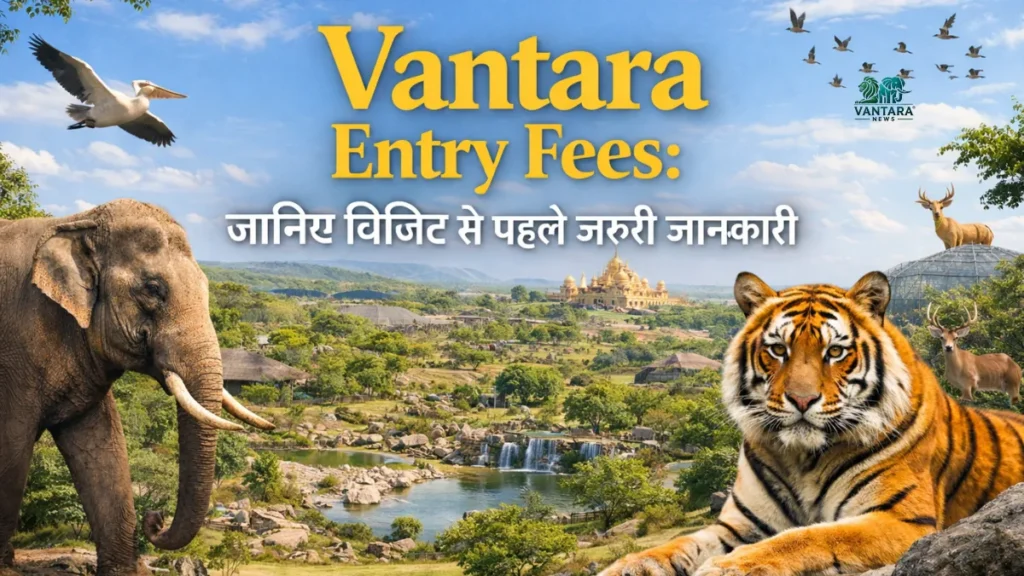
Vantara Entry Fees have become a topic of growing curiosity, especially among wildlife enthusiasts, researchers, and travelers planning a trip to Gujarat. As interest in this unique conservation initiative increases, so do questions about public access, ticket pricing, and visitor eligibility. However, Vantara is not a typical zoo, safari park, or commercial tourist attraction. It operates on a very different model—one that prioritizes animal welfare, rescue, rehabilitation, and long-term conservation over mass tourism.
Located near Jamnagar in Gujarat, Vantara is being recognized as one of India’s most ambitious wildlife rescue and conservation projects. The initiative has drawn attention both nationally and internationally for its scale, infrastructure, and focus on animal care. But because it is not designed as a conventional public attraction, understanding the structure behind Vantara Entry Fees requires a closer look at its core mission.
This comprehensive guide explains everything you need to know about Vantara Entry Fees, visitor policies, access rules, and what makes this conservation project different from ordinary wildlife parks.
What Is Vantara? Understanding the Vision Behind the Project
To properly understand Vantara Entry Fees, it is important to first understand what Vantara actually represents.
Vantara is a large-scale wildlife rescue, rehabilitation, and conservation center developed near Jamnagar, Gujarat. Unlike traditional zoos that primarily showcase animals for public viewing, Vantara focuses on rescuing animals from distressing environments—such as illegal wildlife trade, abandoned circuses, private captivity, or poor living conditions—and providing them with a safe, natural, and medically advanced environment.
The word “Vantara” itself reflects a connection to forests and wildlife, symbolizing a sanctuary designed for the well-being of rescued animals. The project aims to:
- Provide long-term care to rescued animals
- Offer advanced veterinary treatment and rehabilitation
- Recreate natural habitats for physical and psychological recovery
- Support wildlife research and conservation awareness
Because of this welfare-driven philosophy, Vantara does not operate as a daily ticket-based tourist attraction. This fundamental difference directly influences how Vantara Entry Fees are structured.
Are Vantara Entry Fees Officially Announced?
One of the most common questions searched online is: What are the official Vantara Entry Fees?
As of now, there is no publicly released standard ticket price list for general visitors. Unlike public zoos that display ticket prices on websites or at entry counters, Vantara does not function under a fixed public pricing model.
This absence of an official rate has led to mixed information circulating online. Some sources claim entry is free, while others suggest estimated charges. However, the key reality is this:
Vantara is not generally open for unrestricted public walk-in visits.
Access is typically granted through official permission, institutional requests, government coordination, or special invitations. Therefore, Vantara Entry Fees—where applicable—are determined based on purpose, category, and approval rather than a standard ticket system.
Why Vantara Does Not Follow a Traditional Ticket Model
Most wildlife attractions generate revenue through ticket sales. However, Vantara follows a conservation-first approach rather than a commercial tourism model.
There are several reasons why Vantara Entry Fees are structured differently:
1. Animal Welfare Comes First
Large crowds, noise, and uncontrolled visitor movement can cause stress to rescued animals—many of whom have already experienced trauma. Limiting public access ensures animals recover in a calm and secure environment.
2. Sensitive Medical Infrastructure
Vantara houses advanced veterinary facilities, quarantine zones, and rehabilitation areas. These are highly controlled spaces where access is restricted to trained personnel.
3. Research and Conservation Priority
The project focuses on long-term conservation and rehabilitation rather than entertainment. Visitor access is therefore secondary to animal care operations.
Because of these factors, Vantara Entry Fees are not designed as revenue-generating ticket charges but rather as structured administrative or coordination-based arrangements where applicable.
Vantara Entry Fees by Visitor Category
Access to Vantara depends significantly on the type of visitor. Not all visitors are treated under the same criteria. The table below helps clarify how entry works for different categories:
| Visitor Category | Entry Status | Nature of Fees |
|---|---|---|
| General Tourists | Restricted / Limited Access | No publicly declared fixed fee |
| Students & Researchers | Permission-based Entry | Depends on institutional approval |
| Wildlife Experts | Official / Professional Access | Protocol-based |
| Government Officials | Authorized Visit | Not applicable |
| Special Invitees | Invitation-only | Based on arrangement |
This table clearly shows that Vantara Entry Fees are not uniform. Instead, access is purpose-driven and controlled.
Comparing Vantara Entry Fees with Zoo Ticket Prices
It is important not to compare Vantara Entry Fees with regular zoo tickets.
Traditional Zoo Model:
- Open daily to the public
- Fixed ticket rates for adults and children
- Online booking or counter sales
- Revenue-driven operations
Vantara Model:
- Limited and controlled access
- No general public ticket counter
- Permission-based visitation
- Conservation-driven objective
There is currently no online booking portal or daily ticket counter for Vantara like one would find at public zoos in major Indian or international cities. Where Vantara Entry Fees apply, they are associated with coordination, guided tours, or institutional programs rather than commercial ticket sales.
Planning a Visit: What You Should Know
If you are interested in visiting Vantara, it is essential to adjust expectations. This is not a spontaneous travel destination where you can purchase tickets at the gate.
Here are key points to consider:
1. Official Communication Is Necessary
Visitors typically need to contact authorized channels for permission.
2. Visits May Be Guided
Where access is granted, visits are often supervised or guided to ensure minimal disruption to animal care operations.
3. Purpose Matters
Educational tours, research visits, or government programs are more likely to be approved compared to casual tourism.
4. Fees Are Secondary to Approval
If Vantara Entry Fees are applicable, they are not the primary barrier. Approval and purpose are more significant factors.
Common Misconceptions About Vantara Entry Fees
With increasing online discussions, several misunderstandings have emerged:
Misconception 1: Entry Is Completely Free for Everyone
Reality: Access is controlled and not open for general walk-in visitors.
Misconception 2: It Functions Like a Safari Park
Reality: Vantara is primarily a rescue and rehabilitation center, not a commercial safari.
Misconception 3: You Can Buy Tickets Online
Reality: There is currently no public ticket booking system.
Understanding these points prevents confusion when searching for Vantara Entry Fees online.
Why Controlled Access Is Important
The restricted access model reflects a global shift in how serious conservation projects operate. Many high-level wildlife rescue centers worldwide prioritize animal well-being over visitor volume.
Animals rescued from circuses, illegal trade networks, or neglect often require psychological rehabilitation. Excessive human exposure can reverse recovery progress. Therefore, Vantara Entry Fees—if applied—are part of a broader controlled system rather than a tourism-focused pricing strategy.
The Broader Impact of Vantara
Beyond the question of Vantara Entry Fees, the project has wider implications:
- It highlights India’s growing commitment to wildlife conservation.
- It sets new benchmarks in veterinary care infrastructure.
- It raises awareness about ethical wildlife treatment.
- It shifts the conversation from entertainment to rehabilitation.
By limiting commercial tourism, Vantara reinforces the idea that not every wildlife space should operate as a mass tourist attraction.
Is Vantara Expected to Open to the Public in the Future?
While policies can evolve as projects expand, any potential public opening would likely remain regulated. If a structured public access model is introduced in the future, clearer information regarding Vantara Entry Fees may become officially available.
Until then, it is best to rely only on verified announcements rather than speculative online sources.
यह भी पढ़े: Vantara: जानवरों की देखभाल में वैश्विक मानक स्थापित करने वाला प्रोजेक्ट
Responsible Visiting: A New Mindset
Vantara represents a new way of thinking about wildlife spaces. Instead of focusing solely on visitor entertainment, it emphasizes responsibility, protection, and long-term care.
Those who receive an opportunity to visit often describe the experience as educational rather than recreational. It provides insight into:
- Wildlife rescue operations
- Veterinary treatment procedures
- Habitat restoration techniques
- Ethical conservation challenges
In that context, Vantara Entry Fees—if applicable—become secondary to the knowledge and awareness gained during the visit.
यह भी पढ़े: Vantara Map: भारत की आधुनिक वन्यजीव संरक्षण योजना को समझने का एक स्पष्ट दृष्टिकोण
Conclusion: on Vantara Entry Fees
To summarize:
- There is no fixed, publicly announced ticket price for Vantara.
- Entry is restricted and permission-based, not open to daily walk-in visitors.
- Vantara Entry Fees, where applicable, are determined case-by-case.
- The project prioritizes animal welfare and conservation over tourism revenue.
- Comparing it to a zoo ticket system is inaccurate.
If you are interested in visiting, focus first on understanding the mission, policies, and eligibility criteria rather than just searching for ticket costs.
As Vantara continues to grow, more clarity around visitor policies may emerge. For now, Vantara Entry Fees should be viewed within the broader framework of conservation responsibility and controlled access—not commercial tourism.
Vantara stands as a symbol of modern wildlife conservation in India. While curiosity around Vantara Entry Fees is understandable, the real story lies in its mission—to rescue, rehabilitate, and protect animals in a secure and humane environment.
FAQ
What are the official Vantara Entry Fees?
There is currently no publicly declared fixed entry fee for general visitors.
Can tourists buy tickets at the gate?
No, Vantara does not operate a public ticket counter.
Is Vantara open daily to visitors?
No, access is limited and permission-based.
Who can visit Vantara?
Typically researchers, officials, experts, students, or invited guests.
Will Vantara open to the public in the future?
Any changes would depend on official policy updates.