
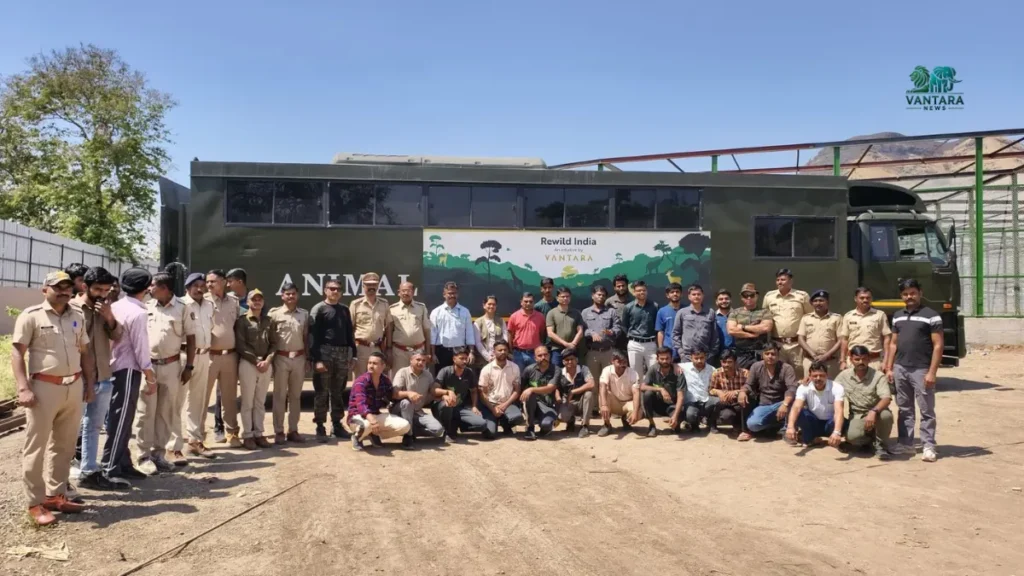
In a significant wildlife management move, authorities have relocated 20 leopards from Maharashtra’s Pune district to Vantara Gujarat, a large-scale animal rescue, care, and rehabilitation centre. The transfer comes amid a noticeable surge in human–leopard conflict in the Junnar forest division, prompting the state Forest Department to take urgent steps to manage the growing leopard population in the region.
The relocation is part of a broader conservation effort aimed at ensuring the safety of both local communities and wild animals. Officials say the leopards were shifted to Vantara Gujarat, a facility developed by the Reliance Foundation in Jamnagar, which is equipped with advanced infrastructure for wildlife rescue and rehabilitation.
Rising Human–Leopard Conflict in Pune’s Junnar Division
The decision to relocate the animals follows a significant increase in leopard–human encounters in the Junnar division of Pune district. This forest division includes the talukas of Junnar, Ambegaon, Shirur, and Rajgurunagar, where expanding human settlements and agricultural activity have increasingly overlapped with leopard habitats.
Forest authorities have reported that leopard sightings and conflict incidents have been rising steadily over the past few years. In recent months, the situation became particularly concerning as several attacks on humans were reported.
Since October 2025, at least three people, including two children, have lost their lives in leopard attacks in the region, while several others have suffered injuries. These incidents prompted the Maharashtra Forest Department to intensify monitoring and capture operations in areas where leopards were posing a risk to residents.
Overcrowding at Manikdoh Leopard Rescue Center
Many of the captured animals were initially housed at the Manikdoh Leopard Rescue Center, located near Junnar. This facility has long been used to shelter leopards rescued from conflict zones or accidental traps such as open wells.
However, the rescue centre has a maximum capacity of 50 leopards, while the number of animals rescued in recent years has exceeded that limit.
According to a statement issued by the Deputy Conservator of Forest (Junnar Division), the growing number of captured animals made it necessary to identify alternative locations that could safely house and rehabilitate them.
To address the issue, authorities proposed transferring several leopards to the Greens Zoological Rescue and Rehabilitation Centre (GZRRC) at Vantara Gujarat, a facility designed to handle large-scale wildlife rescue and long-term animal care.
Approval from Central Zoo Authority
Before relocating the animals, the Maharashtra Forest Department sought permission from the Central Zoo Authority of India (CZA) in New Delhi.
After reviewing the proposal, the authority approved the transfer on December 20, 2025. Following the approval, an agreement was formally signed between the Maharashtra Forest Department and the management of Vantara Gujarat to relocate 50 leopards in phases.
The relocation is planned in multiple stages to ensure that the animals are transported safely and without stress.
First Phase: 20 Leopards Relocated
The first phase of the relocation process began with the transfer of 20 leopards. A specialized team of 25 wildlife experts and officials from the Greens Zoological Rescue and Rehabilitation Centre traveled to Junnar to oversee the operation.
The team was led by veterinary officer Gaurav Shrivastav, who supervised the health checks and transport arrangements for the animals.
Following directions from senior forest officials — including Additional Principal Chief Conservator of Forest Jitendra Ramgaonkar and Chief Conservator of Forest Ashish Thakare — the leopards were transported in specially designed rescue vehicles.
The batch included 10 male and 10 female leopards, ensuring a balanced relocation.
Safe Transportation with Veterinary Monitoring
Officials emphasized that extensive precautions were taken during the transportation process to ensure the safety and well-being of the animals.
The leopards were moved in a well-equipped rescue van designed specifically for wildlife transport, featuring secure enclosures and monitoring systems.
Veterinary professionals accompanied the animals during the journey to continuously assess their condition.
According to Chief Conservator of Forest Ashish Thakare:
“All necessary precautions were taken to relocate the leopards safely to Vantara Gujarat. Veterinary experts monitored them throughout the journey to ensure their health and safety.”
The animals were expected to reach the Jamnagar facility the following day after departure.
Key Details of the Leopard Relocation Operation
| Category | Details |
|---|---|
| Number of leopards relocated | 20 |
| Gender distribution | 10 male, 10 female |
| Origin | Junnar division, Pune district |
| Destination | Vantara Gujarat, Jamnagar |
| Approval authority | Central Zoo Authority of India |
| Approval date | December 20, 2025 |
| Total planned relocation | 50 leopards |
| Transport supervision | Veterinary and forest officials |
More Leopards May Be Shifted Soon
Forest officials confirmed that the current relocation is only the first phase of a larger plan.
In the coming months, another 30 leopards may be transferred to Vantara Gujarat, depending on logistical arrangements and monitoring results from the initial relocation.
Authorities say the move will help reduce overcrowding at the Manikdoh rescue centre while providing better care and long-term management for the animals.
Leopard Rescue Operations in Junnar
The Junnar forest division has been actively involved in wildlife rescue operations for years. Leopards in the region often fall into open agricultural wells, a common hazard in rural Maharashtra.
Over the past five years, the Forest Department has rescued 184 leopards in the Junnar division, many of which were trapped in such wells or found wandering near villages.
The increasing number of rescues highlights the growing overlap between human settlements and wildlife habitats.
| Year Range | Leopards Rescued in Junnar Division |
|---|---|
| Last 5 Years | 184 Leopards |
| Common rescue situation | Leopards trapped in open wells |
| Current holding facility | Manikdoh Leopard Rescue Center |
Role of Vantara Gujarat in Wildlife Rehabilitation
The relocation of these animals underscores the growing role of Vantara Gujarat as a major wildlife rescue and rehabilitation hub in India.
Located in Jamnagar, the facility has been developed with advanced infrastructure to handle injured, rescued, and displaced wildlife. It provides medical care, rehabilitation enclosures, and specialized veterinary support.
By accommodating rescued animals from different states, Vantara Gujarat helps reduce pressure on regional rescue centres while ensuring that animals receive proper long-term care.
Wildlife experts believe that such facilities will become increasingly important as human expansion continues to impact natural habitats.
Also read: Sachin Tendulkar Arrives in Jamnagar with Family; Yuvraj Singh Visits Vantara Amid Pre-Wedding Buzz
Balancing Wildlife Conservation and Human Safety
Authorities say the relocation effort represents a balanced approach to wildlife management. While protecting endangered species remains a priority, ensuring the safety of local communities is equally important.
By moving some of the rescued leopards to Vantara Gujarat, the Forest Department aims to reduce human–wildlife conflict in Pune’s rural areas while giving the animals a safer environment.
As conservation efforts continue, officials are also exploring measures such as well-covering projects, habitat restoration, and public awareness campaigns to minimize future conflicts.
The ongoing relocation program is expected to play a crucial role in addressing the immediate challenges posed by the rising leopard population in the region while strengthening India’s broader wildlife conservation efforts.