
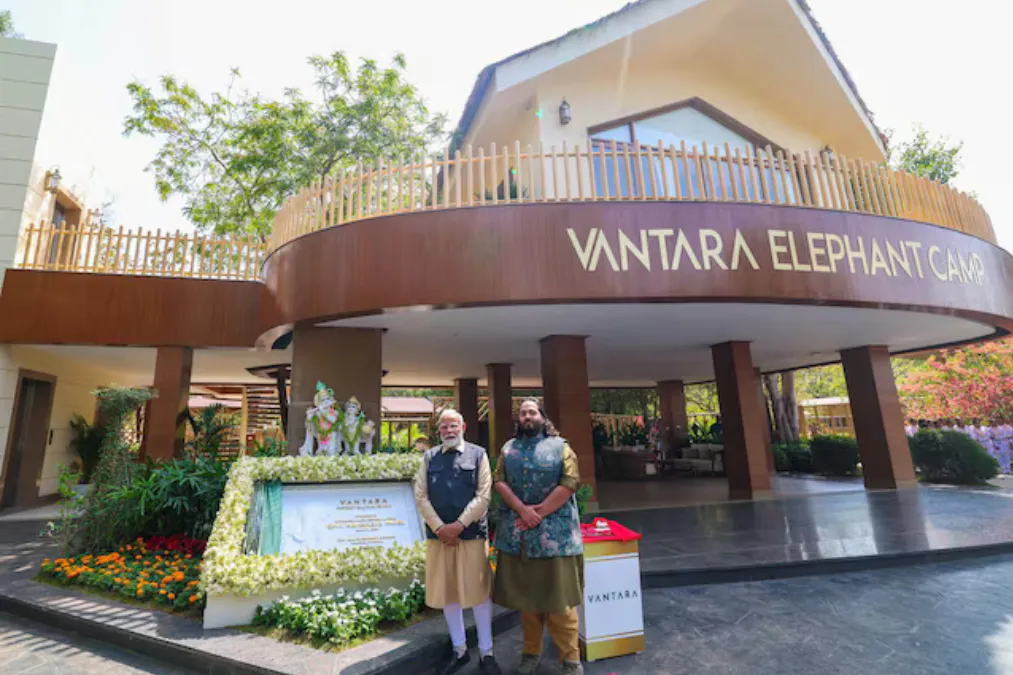
Vantara Zoo: India’s latest Union Budget has introduced a significant policy change that is expected to impact one of the country’s most high-profile wildlife conservation projects. From February 2, the Indian government has imposed a 30% customs duty on the import of animals and birds, ending a long-standing exemption that had previously reduced costs for non-commercial conservation initiatives.
The move is being seen as a major setback for vantara zoo, a sprawling wildlife rescue and conservation centre in Gujarat operated by the philanthropic arm of billionaire Mukesh Ambani’s Reliance Group.
A Major Shift in India’s Wildlife Import Policy
Until now, animal imports for conservation, rescue, or rehabilitation purposes often benefited from customs duty exemptions. The removal of this exemption means that institutions bringing animals from overseas will now face a substantial increase in costs, particularly for logistics-heavy operations involving large mammals and rare species.
According to legal and trade experts, the policy change may not affect India’s zoo sector uniformly. Most Indian zoos are state-run and rely largely on domestic breeding or animal exchanges within the country. Vantara zoo, however, stands apart due to the sheer scale of its international rescue and rehabilitation efforts.
Why Vantara Zoo Is Uniquely Affected
Spread across 3,500 acres (1,400 hectares) in Gujarat, vantara zoo is one of the largest wildlife conservation facilities in the world. The centre is home to approximately 2,000 species, making it vastly larger and more diverse than typical Indian zoological parks.
Since 2022, the facility has imported a wide range of animals, including cheetahs, rhinoceroses, exotic birds, and dozens of reptile species, from countries such as South Africa, the United Arab Emirates, Venezuela, and parts of Europe.
A Reuters analysis published in September revealed that no other zoo in India imports animals on a comparable scale, making Vantara particularly vulnerable to the new customs duty.
Overview of Vantara Zoo’s International Animal Imports
| Category | Details |
|---|---|
| Location | Gujarat, India |
| Total Area | 3,500 acres |
| Species Housed | ~2,000 |
| Countries of Import | South Africa, UAE, Venezuela, Germany |
| Declared Import Value | Approx. $9 million |
| Import Duty (New) | 30% customs tax |
Rising Costs Without Commercial Gain
Vantara zoo has repeatedly stated that it does not purchase animals for commercial purposes. Instead, it facilitates international transfers strictly for rescue, conservation, and rehabilitation, often involving animals that cannot survive in their original environments.
While no purchase fees are paid, the zoo bears significant costs related to insurance, veterinary care, specialised transport, quarantine procedures, and freight logistics—expenses that are now subject to the new import tax regime.
Legal experts warn that these additional costs could place a heavy financial burden on international rescue missions.
“Even large, globally benchmarked zoological and conservation projects, including facilities such as Vantara, will be affected,” said Rajat Mohan, Senior Partner at Indian law firm AMRG & Associates.
“While the overall volume of imports may be limited, the cost implications are substantial.”
Government Silence on Policy Rationale
Notably, the Indian government has not provided a formal explanation for withdrawing the customs duty exemption on animal and bird imports. Vantara zoo has also not issued a public response to media queries regarding how the new tax will impact its future rescue operations.
Some experts believe the decision may be linked to a broader policy goal of encouraging domestic breeding and reducing dependence on international transfers.
Legal and Conservation Concerns
Delhi-based lawyer Manuj Sabharwal explained that while the policy may aim to promote self-sufficiency, it risks unintended consequences.
“Although the tax is designed to encourage domestic breeding, its blanket application places a significant financial strain on international rescue and rehabilitation missions,” he said.
Conservationists have also raised concerns that higher costs could slow down emergency rescues involving endangered species that require rapid international relocation.
Global Scrutiny and Past Controversies
Vantara zoo has attracted international attention in recent years, not only for its scale but also for regulatory scrutiny. In 2024, the facility was featured prominently during pre-wedding celebrations of Anant Ambani, the youngest son of Mukesh Ambani. The centre has hosted high-profile visitors, including Prime Minister Narendra Modi and football icon Lionel Messi, who toured the zoo with Anant Ambani in December.
However, the zoo has also faced questions from the Convention on International Trade in Endangered Species (CITES), which last year flagged discrepancies in trade documentation and raised concerns over the verification of some animals’ origins.
Although India’s Supreme Court later cleared Vantara of any wrongdoing, European authorities have indicated that they continue to closely monitor exports involving the facility.
Example of Past Import Costs
| Shipment | Origin | Declared Value | Import Duty |
|---|---|---|---|
| 26 Rare Parrots | Germany (2023) | $25,194 | Waived (pre-tax change) |
| Total Imports to Date | Multiple countries | ~$9 million | Taxable under new rules |
Under the new customs policy, similar shipments would now attract a 30% import tax, significantly increasing operational expenses.
What Lies Ahead for Vantara Zoo
While Vantara zoo remains compliant with Indian and international wildlife laws, the new tax regime introduces uncertainty over the future scale of its international rescue efforts. Experts suggest that unless specific exemptions are reintroduced for verified conservation projects, India’s ability to participate in global wildlife rescue operations could be limited.
For now, the impact of the policy will be closely watched—both within India and internationally—as conservation groups, legal experts, and policymakers assess whether the new tax strikes the right balance between regulation, sustainability, and global wildlife protection.