
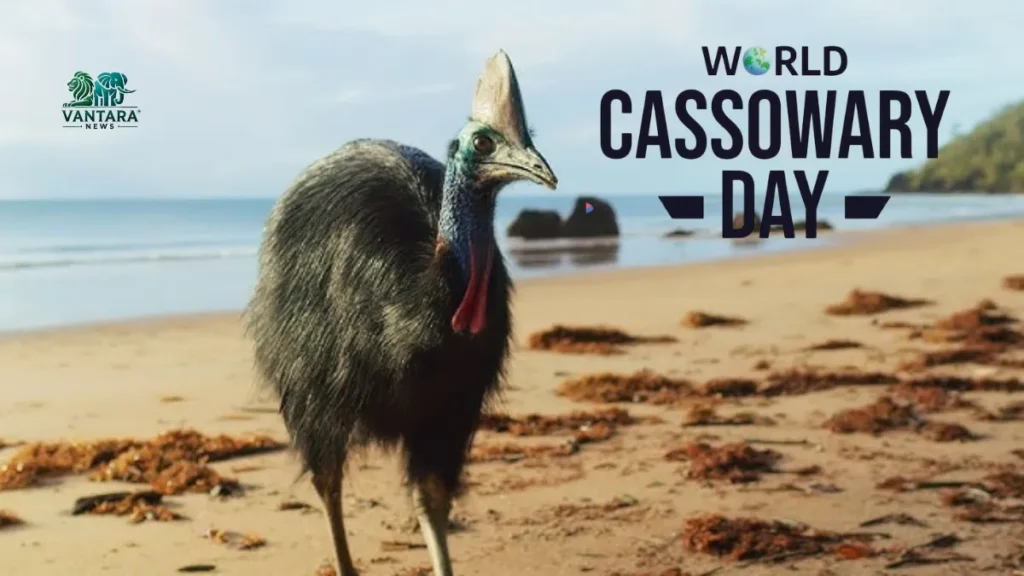
September 26 marks World Cassowary Day, a global awareness day dedicated to one of the planet’s most misunderstood and extraordinary birds — the cassowary. Often labeled as the “world’s most dangerous bird,” the cassowary carries a fearsome reputation. Yet behind its intimidating appearance lies a vital ecological guardian whose survival is deeply tied to the health of tropical rainforests.
World Cassowary Day is not merely about highlighting a rare species. It is a reminder of how closely human survival is connected to biodiversity, forest ecosystems, and the delicate balance of nature. Conservationists, scientists, educators, and local communities use this day to spotlight the cassowary’s critical role in maintaining rainforest life and to warn about the growing threats pushing this ancient bird toward extinction.
What Is World Cassowary Day and Why Is It Observed?
World Cassowary Day is observed every year on September 26 to raise global awareness about cassowaries, their ecological importance, and the urgent need to protect their natural habitats. The day aims to shift public perception — from fear and misunderstanding to respect and conservation.
Cassowaries are not aggressive by nature, but due to their size, strength, and powerful claws, they have earned a reputation as dangerous animals. In reality, attacks on humans are extremely rare and almost always linked to habitat disturbance or human interference. Conservationists argue that the real danger lies not in cassowaries, but in the rapid destruction of the rainforests they depend on.
World Cassowary Day encourages people to understand that protecting cassowaries means protecting entire rainforest ecosystems.
The Cassowary: An Ancient Bird With a Modern Importance
Cassowaries are large, flightless birds native to the tropical rainforests of northeastern Australia, Papua New Guinea, and nearby islands. These birds have existed for millions of years and are often described as “living dinosaurs” due to their prehistoric appearance and lineage.
Key Facts About Cassowaries
| Aspect | Details |
|---|---|
| Scientific Name | Casuarius |
| Major Species | Southern Cassowary, Northern Cassowary, Dwarf Cassowary |
| Habitat | Tropical rainforests of Australia and New Guinea |
| Height | 1.5 to 2 meters |
| Weight | 40 to 70 kilograms |
| Conservation Status | Vulnerable (IUCN Red List) |
| Ecological Role | Seed dispersal and forest regeneration |
| Awareness Day | World Cassowary Day (September 26) |
Among the three species, the Southern Cassowary is the most well-known and the most threatened.
Why Cassowaries Are Called the “Gardeners of the Rainforest”
One of the most important reasons World Cassowary Day exists is to highlight the bird’s unique ecological role. Cassowaries are often referred to as the “gardeners of the rainforest.”
Unlike many animals, cassowaries can consume large fruits whole, including those with seeds too big for other birds or mammals to swallow. After digestion, these seeds are deposited across vast distances through droppings, often far from the parent tree.
This process allows:
- New trees to grow
- Forest diversity to remain intact
- Rare plant species to survive
Scientists classify cassowaries as a keystone species, meaning their presence directly supports the survival of countless other organisms. Without cassowaries, large portions of rainforest vegetation would fail to regenerate.
The “Most Dangerous Bird” Label: Myth vs Reality
Cassowaries have powerful legs and sharp, dagger-like claws that can grow up to 12 centimeters long. In defensive situations, they are capable of delivering serious injuries. This physical capability has led to sensational headlines branding them as the world’s most dangerous bird.
However, wildlife experts emphasize that:
- Cassowaries are shy and solitary
- They avoid humans whenever possible
- Incidents usually occur due to feeding, provocation, or habitat intrusion
World Cassowary Day aims to correct this narrative and replace fear with understanding.
Unique Physical Features of the Cassowary
The Casque: Nature’s Mystery Helmet
One of the cassowary’s most striking features is the casque, a helmet-like structure on its head. Scientists believe it may:
- Help amplify low-frequency sounds
- Protect the head while moving through dense forest
- Play a role in social recognition
Solitary Lifestyle
Cassowaries prefer a solitary life and interact with others mainly during breeding season. Interestingly, male cassowaries are responsible for incubating eggs and raising chicks — a rare trait among birds.
Why World Cassowary Day Matters More Than Ever
Despite their importance, cassowaries are facing severe threats that have pushed them into the Vulnerable category on the IUCN Red List.
Major Threats to Cassowaries
1. Deforestation
Rapid urban development, logging, and agricultural expansion have fragmented rainforests into smaller patches, limiting food sources and breeding grounds.
2. Road Accidents
As forests shrink, cassowaries are forced to cross roads, leading to fatal vehicle collisions — one of the leading causes of cassowary deaths.
3. Predation by Dogs
Domestic and feral dogs frequently attack cassowaries, particularly young birds and chicks.
4. Human Interference
Illegal hunting, feeding, and encroachment into natural habitats increase stress and risk for cassowary populations.
World Cassowary Day serves as a global alarm, urging immediate action before the damage becomes irreversible.
How World Cassowary Day Is Celebrated Around the World
In regions where cassowaries live, and increasingly across the globe, World Cassowary Day is marked by various educational and conservation activities.
Educational Programs
Schools and universities host workshops to teach students about biodiversity, rainforest ecosystems, and the cassowary’s role within them.
Awareness Campaigns
Local communities organize cultural events, exhibitions, and nature walks to promote coexistence with wildlife.
Social Media Movements
Environmental groups and individuals share facts, stories, and images using #WorldCassowaryDay, helping the message reach a global audience.
Conservation Fundraisers
Non-profit organizations raise funds to support habitat protection, rescue centers, and scientific research.
Conservation Efforts Offering Hope
While the challenges are significant, conservation efforts are making a difference.
Wildlife Corridors and Underpasses
Special crossings allow cassowaries to move safely between forest areas without encountering vehicles.
Protected Areas
Governments and conservation groups are expanding protected rainforest zones to preserve natural habitats.
Rescue and Rehabilitation Centers
Injured cassowaries receive medical care and rehabilitation before being released back into the wild.
Community Education
Local residents are trained to coexist safely with cassowaries and understand their importance.
World Cassowary Day highlights these efforts and encourages further global support.
The Global Impact of Losing Cassowaries
If cassowaries were to disappear, the consequences would extend far beyond a single species. Entire forest ecosystems would suffer, leading to:
- Loss of plant diversity
- Reduced carbon absorption
- Increased vulnerability to climate change
By protecting cassowaries, humans indirectly protect climate stability, water systems, and countless other species.
Read also: Indian Import Tax on Animals Creates Major Cost Challenge for Ambani Family’s Vantara Zoo
Conclusion: World Cassowary Day Is a Promise to the Future
World Cassowary Day is more than a symbolic observance. It is a commitment to protecting one of nature’s most essential yet misunderstood creatures. Though often feared, the cassowary is a silent guardian of the rainforest-a species whose survival ensures the survival of countless others.
Saving the cassowary means safeguarding biodiversity, preserving rainforests, and securing a healthier planet for future generations. Every individual can contribute, whether by spreading awareness, supporting conservation initiatives, or simply respecting wildlife and natural habitats.
As World Cassowary Day reminds us each year, when the cassowary thrives, the rainforest thrives-and when the rainforest thrives, so does our planet.