
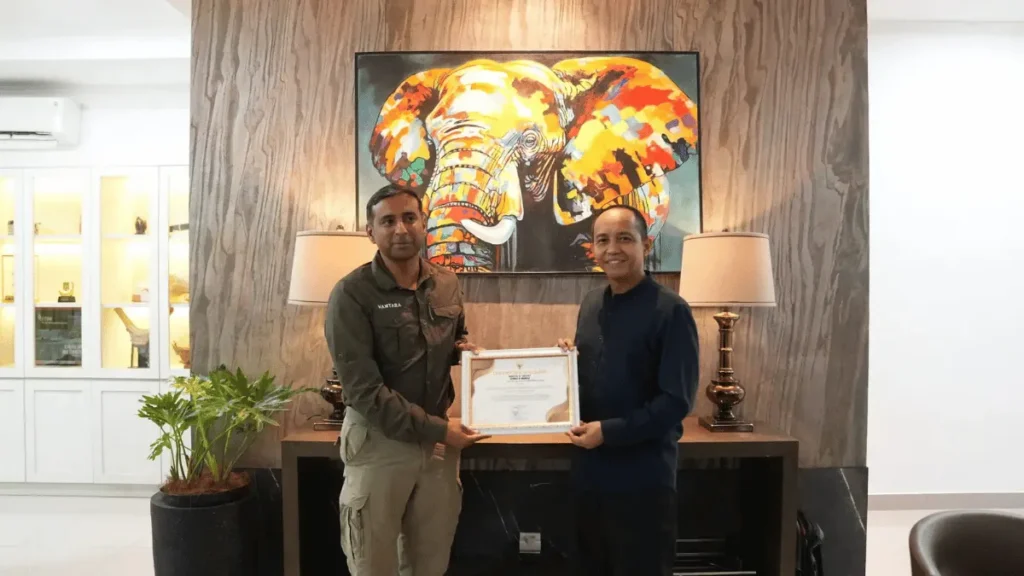
Jakarta: Indonesia is expanding its efforts to protect wildlife and strengthen veterinary care through a major new conservation partnership involving Vantara, the Government of Indonesia and PT Fauna Land Group. The collaboration is aimed at improving wildlife health infrastructure, expanding field-level veterinary capabilities and building stronger local expertise to support animals in their natural habitats.
The announcement was made in Jakarta by Raja Juli Antoni, Minister of Forestry of the Republic of Indonesia, who outlined a series of initiatives designed to strengthen Indonesia’s ability to care for wildlife across the country.
The partnership brings together the Indonesian government’s conservation programmes, Vantara’s experience in wildlife health and animal care, and the field expertise of Indonesian wildlife organisation PT Fauna Land Group.
The cooperation is expected to focus particularly on practical support for wildlife health, veterinary services, animal welfare, caregiver training and conservation programmes carried out in natural habitats.
Vantara Supports Indonesia’s Wildlife Conservation Efforts
Indonesia is recognised for its extraordinary biodiversity and is home to numerous species found nowhere else in the world. Protecting this biodiversity requires not only habitat conservation but also access to specialised veterinary care, trained wildlife professionals and suitable medical infrastructure.
Under the new partnership, Vantara will provide specialist veterinary expertise, technical assistance, infrastructure support and capacity-building programmes. These resources will support initiatives being led by Indonesian authorities and will be developed according to the country’s own conservation priorities.
Speaking at the announcement, Raja Juli Antoni said wildlife conservation remains a responsibility that requires strong national infrastructure and adequate resources.
He said the partnership would help Indonesia strengthen its wildlife health and conservation capabilities while ensuring that the facilities and programmes developed through the cooperation remain under the ownership, operation and management of the Indonesian government and relevant Indonesian authorities.
This approach is intended to ensure that the projects remain closely connected to Indonesia’s long-term conservation requirements rather than functioning as independent programmes.
The Indonesian government will therefore continue to oversee the facilities and initiatives, while Vantara and its partners contribute technical knowledge, expertise and resources.
Major Wildlife Health Initiatives Announced
Several significant initiatives have been identified as part of the cooperation. These include specialist training programmes, mobile veterinary facilities and the expansion of existing wildlife healthcare infrastructure.
One of the most important initiatives is a programme designed to build the skills of elephant caregivers, veterinarians and other officials involved in wildlife management.
Training and knowledge-sharing will be important because wildlife healthcare often requires specialised approaches that differ significantly from conventional veterinary medicine. Large mammals such as elephants require dedicated facilities, appropriate equipment, specialised treatment methods and teams with experience in wildlife behaviour and husbandry.
The partnership aims to strengthen these capabilities within Indonesia, helping local professionals deal more effectively with wildlife health and welfare challenges.
10 Hospitals on Wheels to Support Wildlife Across Indonesia
Another major component of the programme is the introduction of 10 Hospitals on Wheels.
These mobile veterinary units are planned to provide healthcare support for wild animals in their natural environments, or in situ, across different parts of Indonesia.
Access to veterinary treatment can be challenging in remote wildlife habitats. Moving injured or sick animals over long distances can also create additional stress and logistical difficulties. Mobile veterinary facilities can help bring essential medical services closer to where animals live.
The Hospitals on Wheels initiative is therefore expected to improve the ability of wildlife authorities and field teams to respond to medical emergencies and provide treatment closer to the animals’ habitats.
The mobile units will form part of the broader effort to strengthen Indonesia’s wildlife health infrastructure and field capabilities.
Way Kambas Elephant Hospital to Receive Major Upgrade
A key project under the partnership involves the Way Kambas Elephant Hospital, which is set to be upgraded into an Elephant Treatment and Care Centre.
The upgraded facility is expected to receive advanced equipment, tools and technologies to improve the treatment and care of Sumatran elephants.
The project is particularly significant because the Sumatran elephant is an important part of Indonesia’s wildlife heritage and faces serious conservation challenges.
According to the programme details, the upgraded facility will support 62 Sumatran elephants under human care as well as nearly 100 wild Sumatran elephants in the surrounding landscape.
The expansion is expected to strengthen veterinary services for elephants while also improving the ability of wildlife professionals to monitor, treat and manage health issues affecting elephants both in care and in nearby natural environments.
Focus on In Situ Conservation
A major feature of the cooperation is its focus on in situ conservation, which refers to protecting and conserving animals within their natural habitats.
Rather than focusing only on animals already under human care, the partnership aims to strengthen conservation work where wildlife naturally exists.
This includes improving field veterinary capabilities, supporting habitat-based conservation and developing the capacity of local teams responsible for wildlife protection.
For Indonesia, this is particularly important because of the country’s vast forests, islands and diverse ecosystems. Wildlife conservation programmes often need to operate across difficult terrain and remote areas, making field infrastructure and trained personnel essential.
The partnership is intended to help address these challenges by combining Indonesian conservation experience with Vantara’s technical capabilities in wildlife health and animal care.
Government Ownership and Management Will Remain With Indonesia
The Indonesian government has emphasised that facilities and programmes created through the cooperation will remain under the ownership, operation and management of the Government of Indonesia and relevant authorities.
This is an important aspect of the partnership because it places Indonesia’s own conservation priorities at the centre of the programme.
Vantara’s role will involve providing expertise, technical support, infrastructure assistance and capacity-building resources while working closely with Indonesian institutions and Fauna Land.
The long-term objective is to strengthen local capacity so that Indonesia can continue expanding and improving wildlife health and conservation programmes.
Vantara to Share Wildlife Health and Veterinary Expertise
Vivaan Karani, CEO of Vantara, said the organisation was grateful to the Indonesian government and its partners for the opportunity to contribute to the country’s wildlife conservation efforts.
He highlighted Indonesia’s exceptional biodiversity and said Vantara considered it a privilege to support efforts aimed at protecting the country’s natural heritage.
Vantara has developed expertise in wildlife health, veterinary care, animal husbandry and conservation through its work in India. The organisation plans to share this experience with Indonesian wildlife professionals while also learning from Indonesia’s own long-standing conservation knowledge.
Karani stressed that the partnership should result in practical and lasting benefits for wildlife.
The emphasis on knowledge exchange is significant because conservation partnerships can be most effective when expertise moves in both directions. Indonesia has extensive experience managing and protecting its own wildlife and ecosystems, while Vantara brings additional capabilities developed through its work with rescued, rehabilitated and protected animals.
Fauna Land Plays a Key Role in the Partnership
PT Fauna Land Group is also an important part of the cooperation.
Danny Gunalen, CEO of Fauna Land, said Indonesia’s biodiversity represents a shared responsibility and welcomed the opportunity to work with the government and Vantara.
Fauna Land’s experience in wildlife care, conservation and field-based programmes provides a local connection for the partnership.
The organisation works with government authorities, conservation institutions and other partners on efforts related to wildlife welfare and biodiversity protection.
According to Gunalen, the collaboration is expected to strengthen local capacity, improve infrastructure available for wildlife and create long-term benefits for animals as well as the people responsible for their protection.
The involvement of an Indonesian wildlife organisation alongside the government and Vantara is expected to help ensure that international expertise is integrated with local knowledge and field experience.
Broader Cooperation Covers Multiple Areas of Conservation
The latest initiatives are part of a wider cooperation framework established through an existing Memorandum of Understanding (MoU) between the Government of Indonesia and Vantara.
The MoU provides a framework for cooperation in areas including wildlife health, animal welfare and conservation.
The parties have identified priority areas according to Indonesia’s national conservation objectives. The cooperation can cover a broad range of activities, including:
- Wildlife health and veterinary care
- In situ conservation
- Ex situ conservation
- Animal welfare
- Conservation breeding
- Wildlife rehabilitation
- Rewilding
- Capacity building
- Technical support and knowledge sharing
These areas are closely connected. Veterinary care can help rehabilitate injured wildlife, conservation breeding can support threatened populations, and rewilding can eventually help suitable animals return to natural habitats.
Conservation Breeding and Rewilding
The broader role of Vantara also includes conservation breeding programmes designed to support the future restoration of viable wildlife populations.
Such programmes can become important when species face declining numbers or when wild populations need additional support. The ultimate objective in appropriate cases is not simply to maintain animals in human care, but to contribute to the long-term survival of species in suitable natural environments.
Rewilding can form part of that process when animals are healthy, suitable habitats are available and conservation authorities determine that a return to the wild is appropriate.
Vantara’s conservation approach also includes habitat restoration, native species restoration, engagement with local communities and efforts to reduce human-wildlife conflict.
These areas can play an important role in ensuring that conservation benefits both wildlife and the communities living alongside natural habitats.
International Expansion of Vantara’s Conservation Work
The Indonesia partnership also represents a significant step in Vantara’s international conservation engagement.
Following the release of its Five Year Plan, Vantara has outlined an expanded approach to sharing its expertise beyond its main facility in Jamnagar, Gujarat.
The organisation’s work in Jamnagar includes animal rescue, rehabilitation, treatment and long-term care when required. These activities are supported by specialised veterinary medicine, species-specific nutrition, dedicated infrastructure and multidisciplinary teams.
The experience gained through these programmes is now being extended through collaborations intended to support wildlife health, animal welfare and conservation initiatives in other parts of the world.
The Indonesia partnership provides one such avenue for that international engagement, particularly because of the country’s enormous biodiversity and the importance of protecting wildlife in natural habitats.
Partnership Aligned With In Situ Conservation Commitments
The cooperation with Indonesia also follows Vantara’s recent voluntary commitments to the CITES management authority of India to further strengthen its contribution to conservation in the natural range of wildlife.
The focus on in situ conservation reflects a broader recognition that protecting animals requires more than rescue and rehabilitation.
Long-term wildlife conservation depends on healthy ecosystems, functioning habitats, skilled local teams and cooperation between governments, conservation organisations and communities.
The Indonesia programme brings these elements together through a framework that places national conservation priorities at the centre while making additional technical resources available.
What the Partnership Could Mean for Indonesia’s Wildlife
The impact of the programme will ultimately depend on implementation, but the initiatives announced so far represent a substantial effort to strengthen wildlife healthcare capacity.
Training for caregivers and veterinarians can improve the quality of treatment available to animals. Mobile hospitals can make veterinary services more accessible in remote areas. The Way Kambas facility upgrade can provide improved medical support for Sumatran elephants.
At the same time, the wider cooperation framework provides opportunities to work on rehabilitation, conservation breeding, rewilding and habitat-based conservation.
The involvement of Indonesian authorities is particularly important because wildlife protection requires coordination across national and local institutions.
By keeping ownership and management of the facilities with Indonesian authorities, the programme is designed to strengthen the country’s own long-term conservation infrastructure.
A Long-Term Approach to Wildlife Protection
The partnership between Indonesia, Vantara and Fauna Land is more than a single wildlife healthcare project. It represents a broader effort to develop stronger systems for animal care, veterinary medicine and conservation.
Indonesia’s biodiversity makes the need for such systems especially important. From elephants and other large mammals to a wide range of species found across its forests and islands, the country has a major responsibility to protect its natural heritage.
The new cooperation seeks to combine government leadership, Indonesian field experience and Vantara’s specialist expertise.
As the programmes develop, the emphasis will remain on Indonesia’s national conservation priorities and on working within the country’s laws, policies and institutional framework.
For Vantara, the partnership marks an important expansion of its conservation work beyond India. For Indonesia, it offers additional expertise and resources to strengthen wildlife health infrastructure and field capabilities.
Most importantly, the success of the initiative will be measured by its impact on wildlife — whether injured animals receive timely treatment, whether veterinary teams become better equipped, whether habitats remain protected and whether threatened species have stronger prospects for survival in the wild.
With the Government of Indonesia, Vantara and Fauna Land working together, the partnership has the potential to create practical conservation systems that continue delivering benefits well beyond the initial projects.
Also read: Vantara: Flood-Rescued Elephant Jaymoti Airlifted to Jamnagar for Specialized Treatment
About Vantara
Vantara is an animal welfare and conservation organisation founded by Anant Ambani, Executive Director of Reliance Industries Limited.
Its main ex situ programmes in Jamnagar, Gujarat, India, focus on rescuing, rehabilitating and treating animals, with long-term care provided when necessary. Its work is supported by advanced veterinary medicine, species-specific nutrition, specialised facilities and multidisciplinary teams.
Vantara also works in conservation breeding, with programmes intended to support the future restoration of viable wildlife populations in suitable natural habitats through rewilding.
Its in situ conservation activities include native species restoration, habitat restoration, community engagement and efforts to reduce human-wildlife conflict. These programmes are carried out in cooperation with government authorities, conservation institutions and other partners.
About Fauna Land
Fauna Land is an Indonesian wildlife organisation involved in wildlife conservation, animal welfare and biodiversity protection.
The organisation has experience in wildlife care, conservation activities and field-based programmes and works with government authorities, conservation institutions and other partners.
Through its participation in the new partnership, Fauna Land will help bring local experience and expertise together with the capabilities of Vantara and the Indonesian government.
The collaboration is expected to support stronger wildlife healthcare infrastructure, improved professional capacity and more effective conservation programmes across Indonesia.
Also read: Vantara Foundation Proposes Three Wildlife Rescue and Rehabilitation Centres in Assam